Demand based pricing
- Price for the seats still open
- $97.01
- Seats still open
- 9
- Load reached so far, percent
- 62.5
- Move on the published price, percent
- 9.0
Every figure on these worksheets is one you typed. Where a page states something outside your own book, it names the document it came from and the day it was read.
The figures open on a worked example ($97.01) from a small operator's own book. Change any of them and the answer moves as you type.
Download the Demand based pricing worked example (CSV)
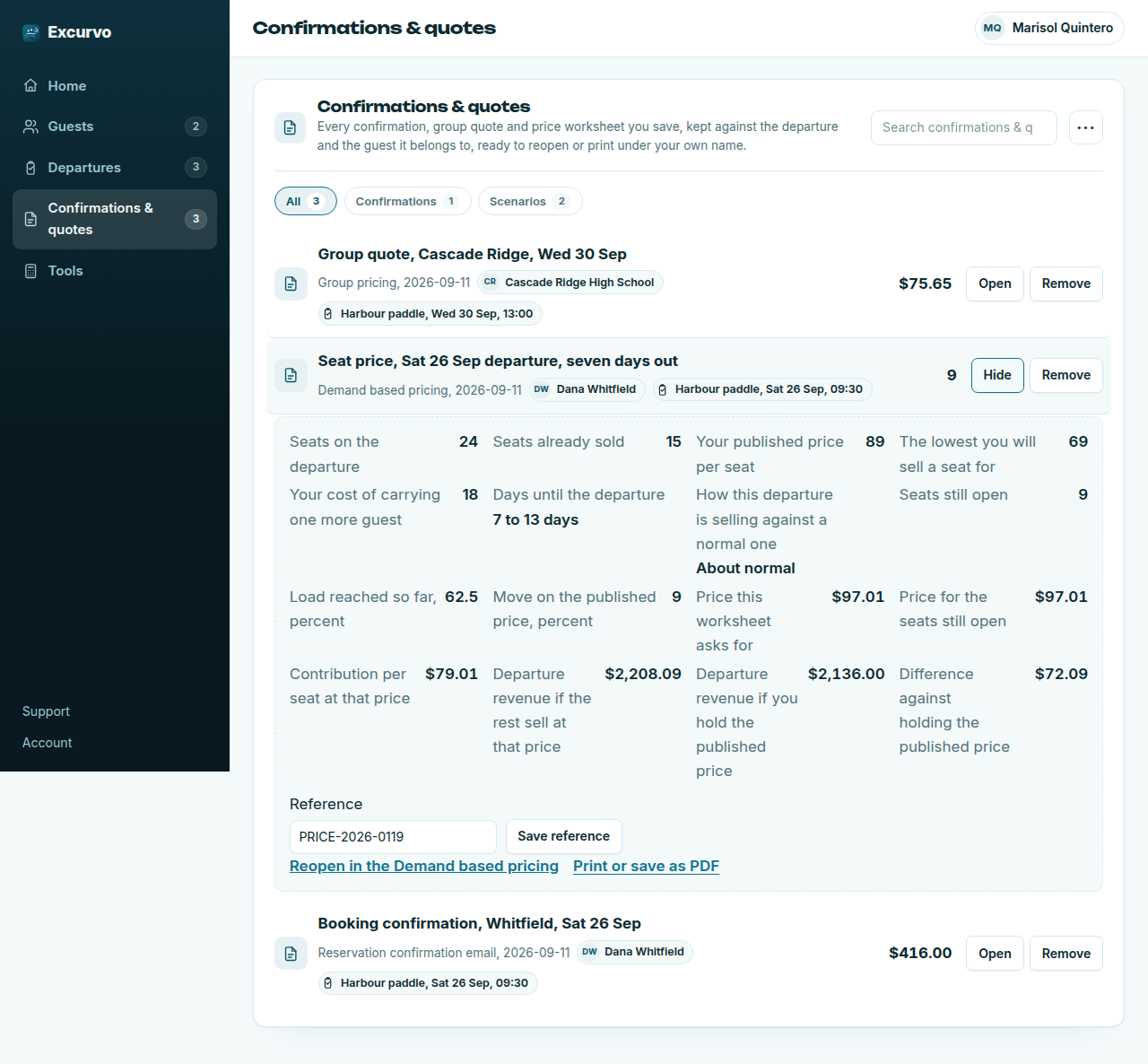
This worksheet prices the seats that are still open on one departure. It takes the capacity, how many seats have already gone, your published price, the floor you will not sell under, what one more guest actually costs you, how close the departure is and whether it is selling ahead or behind a normal one. Out comes the load reached so far, the move it suggests on your published price, the price for the remaining seats, the contribution each of them makes, and what the departure earns against simply holding the list price all the way to the dock.
What operators ask about the Demand based pricing
Is demand-based pricing the same as discounting? No, and the worked example shows why: at 15 of 24 seats sold with the departure a week out, it asks for MORE than the published price, not less. Demand-based pricing moves in both directions. It only reads as discounting when an operator uses it in one direction, which is usually a sign the published price was set for August and never revisited.
What number should I put in the floor? Never less than what one more guest costs you, because below that the seat loses money on a departure that was going anyway, and usually a good deal above it, because a seat sold cheap to somebody who would have paid full price is a loss you cannot see. This page will not let the answer fall below either your floor or your cost per guest.
Will guests notice the price moving? On a same-week booking, rarely. Across a season, yes, and the ones who notice are the resellers and the repeat customers, so the rule that keeps operators out of trouble is that the price moves with the DEPARTURE and never with the person: everybody looking at that same departure at that same moment sees the same number.
Where the constants in this tool come from
46 CFR Part 176, Inspection and Certification (Legal Information Institute, Cornell Law School). Where a small passenger vessel's capacity number actually comes from: the certificate of inspection, not the operator's preference. Read 2026-09-11.
Seller of Travel, California Attorney General. What a business selling travel in California must register, disclose and do with money taken in advance, including the trust-account and refund obligations on deposits. Read 2026-09-11.